


PRODUCT DETAILS
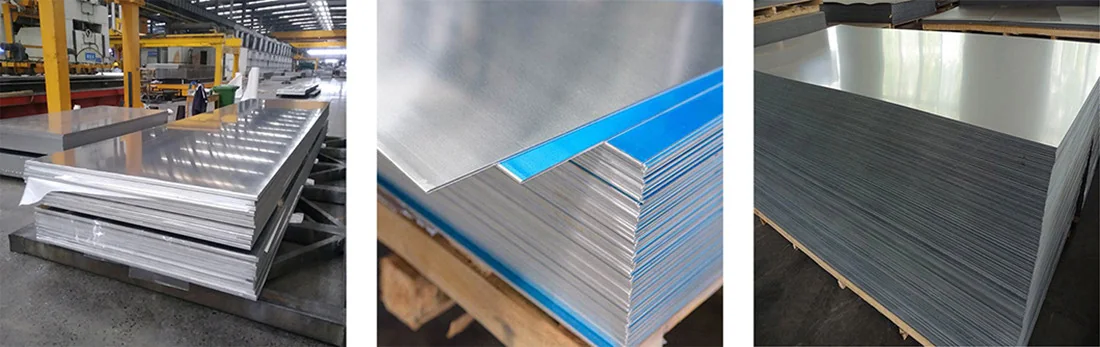
PRODUCT SHOW
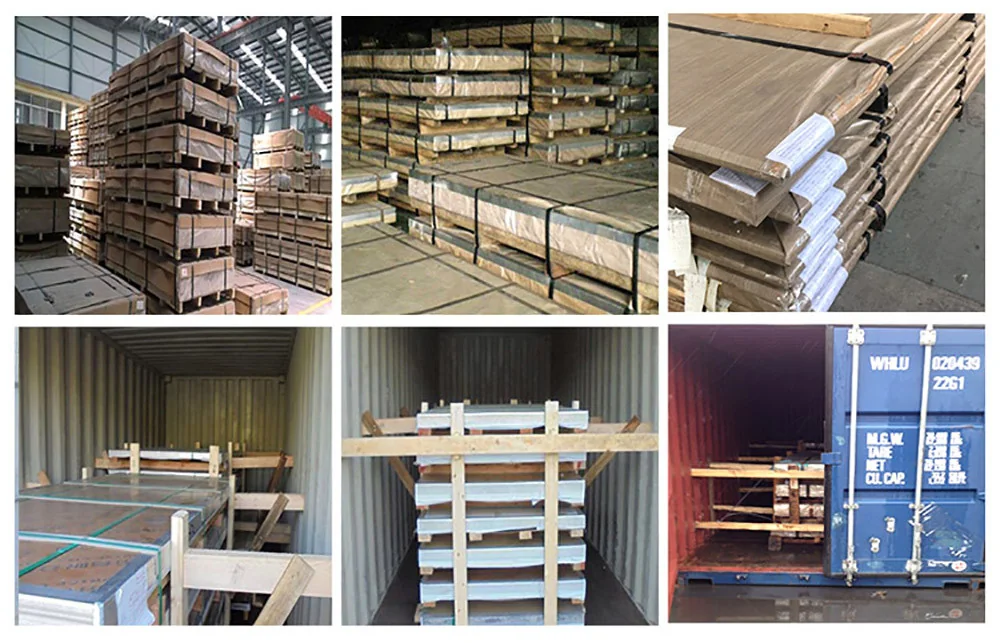
PACKING AND SHIPPING
APPLICATION

What Is 1000 Series Aluminum Sheet?
1000 series aluminum sheet is a commercially pure aluminum product known for its high aluminum content, excellent corrosion resistance, and strong electrical and thermal conductivity. Unlike alloy families that depend on larger additions of elements such as magnesium or manganese, the 1xxx series relies mainly on aluminum purity to deliver its key performance characteristics.
Common grades include 1050 aluminum sheet, 1060, 1070, and 1100 aluminum. Each grade has its own composition limits and is suited to different manufacturing requirements. For example, 1050 and 1060 are widely considered for applications that require good conductivity and formability, while 1100 is frequently selected for general fabrication and components that need reliable corrosion resistance.
Another advantage of 1000 series aluminum sheet is its versatility in processing. Depending on the alloy, temper, and thickness, it can be cut, bent, stamped, rolled, and formed into different shapes. It is used in heat-transfer components, electrical parts, chemical equipment, reflectors, decorative panels, and general sheet metal products.
When selecting a grade, buyers should consider more than aluminum purity alone. Required strength, forming depth, surface finish, operating environment, and applicable standards all influence the final choice. Matching these factors to the intended application helps ensure consistent product performance and efficient material use.
What Are the Key 1000 Series Aluminum Properties?
The main 1000 series aluminum properties come from its high aluminum content and relatively low levels of alloying elements. These characteristics make the series suitable for applications where conductivity, corrosion resistance, and ease of fabrication matter more than high structural strength.
High electrical conductivity: Selected grades are used for electrical components and conductive parts where the required conductivity can be achieved.
Good thermal conductivity: The material transfers heat effectively, making it useful for heat-dissipation parts, reflectors, and certain heat-transfer components.
Excellent corrosion resistance: A naturally formed oxide film helps protect the surface in many atmospheric and general service environments.
Excellent formability: Suitable tempers can support bending, stamping, drawing, spinning, and other cold-forming operations.
Good weldability: Many 1xxx grades can be welded using appropriate procedures and filler materials.
Low density: Aluminum weighs approximately 2.7 g/cm³, making it useful for lightweight product designs.
Limited strength compared with many alloyed grades: Commercially pure aluminum is not the best starting point when high load-bearing capacity is the primary requirement.
Actual performance depends on the alloy grade, temper, thickness, and manufacturing standard. For example, an annealed sheet may offer better ductility for forming, while a strain-hardened temper can provide higher strength with reduced elongation.
For industrial purchasing, it is best to specify the required mechanical properties, conductivity, surface quality, and dimensional tolerances rather than relying on the series designation alone.
1050 vs. 1060 vs. 1070 vs. 1100 Aluminum: Which Grade Should You Choose?
Although 1050, 1060, 1070, and 1100 aluminum belong to the same commercially pure aluminum family, they are not interchangeable in every application. Their chemical composition limits, processing behavior, and suitability for specific performance requirements should be considered before placing an order.
Grade | Minimum aluminum content* | Typical selection focus |
|---|---|---|
1050 | 99.50% | General fabrication, forming, and conductivity |
1060 | 99.60% | Higher-purity applications, electrical and thermal uses |
1070 | 99.70% | Applications with demanding purity or conductivity requirements |
1100 | 99.00% | General-purpose fabrication, forming, and corrosion resistance |
Grade selection should start with the job the material needs to perform. For deep-drawn components, ductility and temper are important. For electrical applications, conductivity requirements and chemical composition should be verified. For decorative or visible surfaces, surface consistency and finishing compatibility may matter more than a small difference in nominal purity.
The highest-purity grade is not automatically the most cost-effective choice. If a component only needs conventional forming and corrosion resistance, a widely available grade may satisfy the specification without unnecessary material costs. Conversely, applications with strict conductivity limits may justify tighter composition controls.
Before comparing supplier quotations, confirm the grade, temper, thickness, width, length, dimensional tolerance, surface requirements, and inspection documents. This helps ensure that quoted materials meet the same technical requirements.
What Are the Common Applications of 1000 Series Aluminum Sheet?
1000 series aluminum sheet is widely used in products that benefit from lightweight construction, good corrosion resistance, high conductivity, or easy forming. Its low strength relative to many alloyed aluminum grades makes application matching particularly important.
In electrical engineering, selected grades can be used for conductive components, electrical parts, and related fabrication where the specified conductivity is sufficient. In thermal management, aluminum's heat-transfer capability makes it suitable for certain heat-dissipation and heat-exchange components.
Manufacturers also use 1000 series sheet in chemical equipment, storage vessels, reflectors, signage, nameplates, decorative panels, and general sheet metal fabrication. Its ductility supports the production of formed parts, while its surface can be suitable for polishing, painting, laminating, or other finishing processes when the grade and surface condition are appropriate.
For household and industrial products, commercially pure aluminum can be a practical choice when the design does not require high mechanical strength. However, chemical compatibility, temperature, loading conditions, and relevant safety standards should be reviewed for each end use.
When sourcing 1000 series aluminum sheet, buyers should communicate the finished component's function rather than simply requesting a generic aluminum sheet. This allows the supplier to recommend a suitable grade and temper, helping balance processability, service performance, and material cost.
Is 1000 Series Aluminum Suitable for Bending, Stamping, and Deep Drawing?
1000 series aluminum is often selected for forming operations because many grades offer excellent ductility. Depending on the temper and thickness, the sheet can be processed through bending, stamping, spinning, drawing, and roll forming to produce parts with different geometries.
For applications involving complex shapes or substantial deformation, an annealed condition such as O temper is often considered because it provides high ductility. Strain-hardened conditions such as H14 or H18 can provide greater strength and stiffness, but they generally have less elongation than softer tempers.
Successful forming depends on more than the alloy designation. Sheet thickness, bend radius, tooling design, forming direction, lubrication, and the amount of deformation all affect the result. Tight bends may require specific radius limits, while deep-drawn components may need trials to assess wrinkling, tearing, and surface defects.
Manufacturers should also consider the appearance of the finished part. Visible applications may require consistent surface quality and careful handling to reduce scratches or marks during processing.
Before mass production, it is advisable to confirm the intended forming process with the material supplier and conduct a forming trial when the geometry is demanding. Selecting the correct temper and thickness can reduce scrap, improve dimensional consistency, and help maintain a stable production process.
How Does 1000 Series Aluminum Compare with 3000 and 5000 Series Aluminum?
The best aluminum series depends on the balance between purity, strength, corrosion resistance, and manufacturing requirements. The 1000, 3000, and 5000 series serve different purposes, so buyers should compare the properties required by their applications rather than assume one family is universally better.
Comparison factor | 1000 series | 5000 series | |
|---|---|---|---|
Main alloy characteristic | High aluminum purity | Primarily manganese alloying | Primarily magnesium alloying |
Typical advantage | Conductivity and formability | Balanced formability and strength | Higher strength in many grades |
Corrosion resistance | Generally excellent in suitable environments | Generally good | Generally good to excellent, depending on grade and environment |
Strength level | Generally lower | Often moderate | Often higher than 1000 series |
Common selection focus | Conductive, formed, and general-purpose parts | General sheet products and formed components | Transport, marine-related, and structural applications where specified |
For components that prioritize conductivity, purity, or extensive forming, 1000 series aluminum may be a suitable starting point. The 3000 series is worth considering when a different balance of strength and formability is needed. The 5000 series may be more appropriate when the design requires greater strength, particularly in applications using suitable magnesium-containing grades.
These are general comparisons, not substitutes for alloy-specific data. Temper, thickness, manufacturing method, and environmental exposure can change the actual performance of each product. Buyers should compare mechanical-property tables and relevant standards before making a final selection.
How Do Temper and Thickness Affect 1000 Series Aluminum Sheet Performance?
The performance of 1000 series aluminum sheet depends not only on its alloy grade but also on its temper and thickness. These specifications influence strength, ductility, bending behavior, dimensional stability, and suitability for different manufacturing processes.
O temper refers to an annealed condition and is often chosen when high ductility is needed for forming or drawing. H tempers, such as H14 and H18, indicate strain-hardened conditions that generally provide greater strength than the annealed condition, although elongation is usually reduced. The exact properties depend on the alloy, temper designation, and product standard.
Thickness affects the stiffness and weight of the finished component, as well as its forming behavior. Thin sheet is often used for lightweight covers, reflectors, and formed components, while thicker plate may be selected for applications that require greater rigidity. However, thickness alone does not determine load-bearing capacity.
When specifying 1000 series aluminum sheet, buyers should confirm the alloy grade, temper, thickness, width, length, and allowable tolerances. For applications involving tight bends, deep drawing, or demanding dimensional requirements, sample testing can help verify that the material is suitable before full-scale production.
A clear technical specification also makes supplier quotations easier to compare. Rather than selecting material by thickness or grade alone, evaluate the complete combination of composition, mechanical properties, processing requirements, and intended service conditions.
1000 Series Aluminum Sheet FAQs
FAQ 1. What Is the Difference Between 1000 Series Aluminum and Pure Aluminum?
1000 series aluminum is generally classified as commercially pure aluminum, with a minimum aluminum content of 99.00% for common grades. It still contains controlled amounts of iron, silicon, and other elements, so it is not necessarily chemically pure aluminum.
The main difference between individual grades lies in their composition limits and resulting performance. For example, 1050 aluminum requires at least 99.50% aluminum, while 1060 requires at least 99.60%. The appropriate grade depends on the required conductivity, formability, surface quality, and applicable material standard.
FAQ 2. Which 1000 Series Aluminum Grade Is Best for Electrical Applications?
The best grade depends on the required electrical conductivity, component design, and applicable specification. Grades such as 1060 and 1070 are commonly considered for applications where high aluminum purity and conductivity are important. Grade 1350 may be relevant for electrical conductor applications with specific conductivity requirements.
Buyers should verify the required conductivity value, chemical composition, temper, and mechanical properties before selecting a grade. A higher nominal aluminum content alone does not guarantee that a material meets every electrical performance requirement.
FAQ 3. Can 1000 Series Aluminum Sheet Be Anodized or Painted?
Yes. Many 1000 series aluminum sheets can be anodized, painted, or finished using other surface treatments. The final appearance and coating performance depend on the alloy grade, initial surface condition, pretreatment, and finishing process.
For decorative panels, reflectors, and visible components, buyers should specify the desired gloss, color, surface uniformity, and finish requirements before production. A sample panel can help confirm appearance and coating compatibility before a large order is placed.
FAQ 4. Does 1000 Series Aluminum Sheet Require Heat Treatment to Increase Its Strength?
1000 series aluminum is generally non-heat-treatable for conventional strengthening. Its strength can be increased through cold working, which is reflected in strain-hardened tempers such as H14 and H18.
Annealing can soften the material and improve ductility for forming, but it does not provide the precipitation-hardening response associated with heat-treatable aluminum alloys. If the finished component requires substantially higher strength, the design team should evaluate other alloy families or reconsider the component's structural requirements.
FAQ 5. What Information Should Buyers Provide When Requesting a Quote for 1000 Series Aluminum Sheet?
To receive an accurate quotation, buyers should provide the alloy grade, temper, thickness, sheet dimensions, required quantity, surface finish, applicable standard, and delivery destination. It is also useful to explain the intended application and any special requirements for conductivity, bending, stamping, or surface appearance.
For repeat orders, buyers should confirm whether material test certificates, inspection records, protective packaging, or specific dimensional tolerances are required. A complete specification helps suppliers assess material availability, production feasibility, and pricing more accurately.
FAQ 6. Is 1000 Series Aluminum Sheet Suitable for Outdoor Use?
1000 series aluminum generally offers excellent resistance to atmospheric corrosion because a protective oxide film forms naturally on its surface. It can be suitable for many outdoor components, including signs, covers, reflectors, and general-purpose fabricated parts.
However, suitability depends on the actual exposure conditions. Industrial pollutants, aggressive chemicals, salt deposits, and prolonged contact with incompatible metals may affect service life. Where appearance or long-term durability is important, the choice of alloy, surface treatment, and maintenance requirements should be evaluated for the specific environment.


