


PRODUCT DETAILS
| Product Name | Stainless Steel Coil |
| Length | as required |
| Width | 3 mm- 2000 mm or as required |
| Thickness | 0.1mm-300mm or as required |
| Standard | AISI,ASTM,DIN,JIS,GB,JIS,SUS,EN,etc. |
| Technique | Hot rolled / cold rolled |
| Surface Treatment | 2B or according to customer requirement |
| Thickness tolerance | ±0.01mm |
| Material | 201, 202, 301, 302, 303, 304, 304L, 304H, 310S, 316, 316L, 317L, 321,310S 309S, 410, 410S,420, 430, 431, 440A,904L |
| It is widely used in high-temperature applications, medical devices, building materials, chemistry, the food industry, agriculture, and ship components. | |
| Application | It is also used in food and beverage packaging, kitchen supplies, trains, aircraft, conveyor belts, vehicles, bolts, nuts, springs, and screens. |
| MOQ | 25tons.We can also accept sample orders. |
| Shipment time | Within 15-20 working days after receiving deposit or L/C |
| Export packing | Waterproof paper and steel strip packed. |
| Standard Export Seaworthy Package.Suitable for all kinds of transport, or as required | |
| Capacity | 250,000 tons/year |
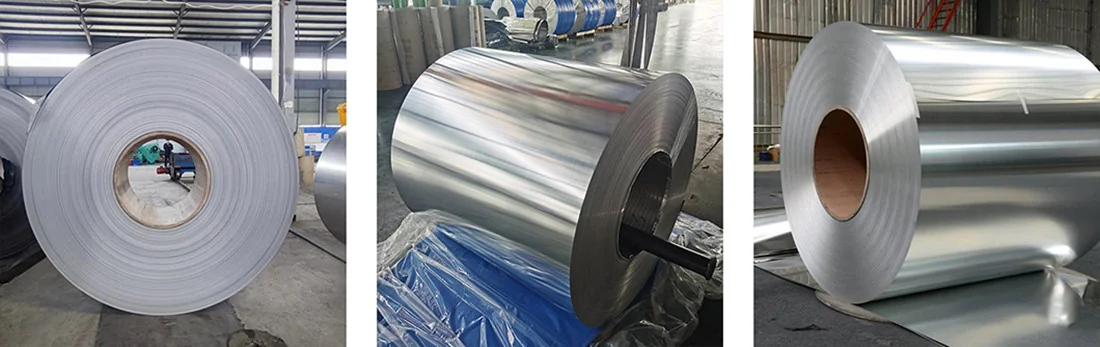
PRODUCT SHOW
PACKING AND SHIPPING
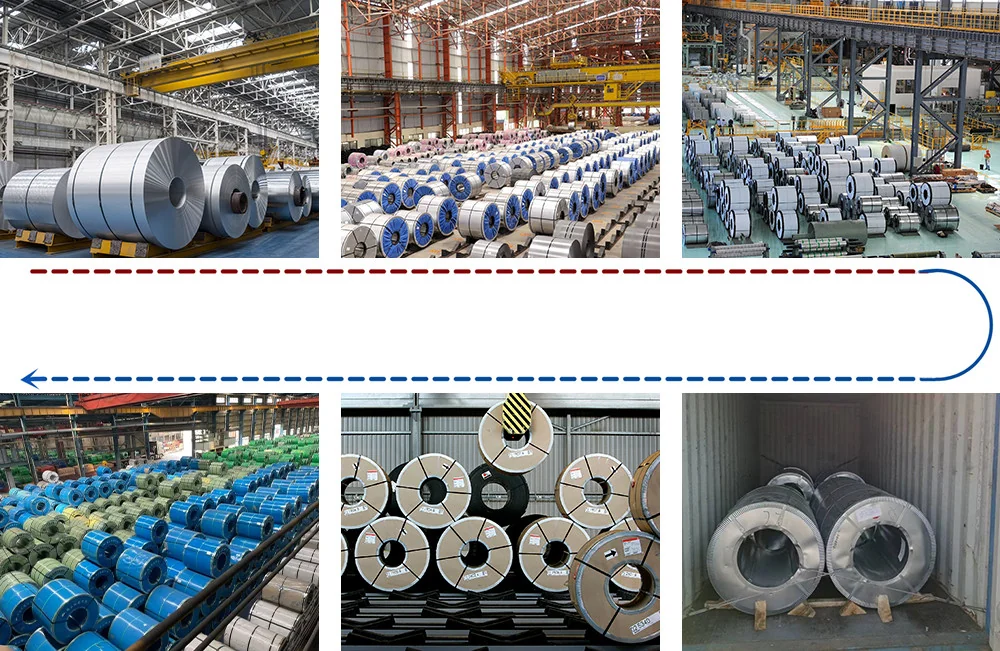
APPLICATION

304L Stainless Steel Coil Specifications
304L stainless steel is an austenitic chromium-nickel stainless steel identified as UNS S30403. Its defining characteristic compared with standard 304 is its lower maximum carbon content.
Typical purchasing specifications for 304L stainless steel coil may include:
Grade: 304L / UNS S30403
Product Type: Stainless Steel Coil
Production: Hot Rolled / Cold Rolled
Width: 3–2000 mm or customized
Thickness: According to required specification
Surface: 2B or customized surface treatment
Edge: Mill Edge / Slit Edge
Standards: ASTM, AISI, EN, JIS, GB, DIN and other applicable standards
Processing: Cutting, slitting and other processing according to order requirements
Packaging: Standard export seaworthy packaging
Customization: Thickness, width, surface and packaging can be specified according to purchasing requirements
Because specifications vary considerably between industrial applications, buyers should confirm the required standard, dimensional tolerance and surface condition when requesting a quotation.
What Makes 304L Stainless Steel Coil Different From Standard 304?
The primary difference between 304L stainless steel coil and standard 304 stainless steel coil is carbon content. The “L” in 304L means low carbon. Under ASTM specifications, 304L has a maximum carbon content of 0.03%.
Why does this matter?
During welding, conventional 304 stainless steel can be exposed to temperatures that encourage chromium carbides to form at grain boundaries. Under certain conditions, this can reduce corrosion resistance around the heat-affected zone. The lower carbon content of 304L reduces this risk.
For this reason, 304L is frequently selected for tanks, welded piping components, food-processing machinery, chemical-processing equipment and other fabricated structures involving substantial welding.
However, 304L should not automatically be considered “better” than 304 for every project. Material selection should depend on fabrication methods, mechanical requirements, operating temperature and service environment.
For components involving little or no welding, standard 304 may be sufficient. Where extensive welding is required and post-weld corrosion performance is important, 304L stainless steel coil can offer a more appropriate material solution.
Why Is 304L Stainless Steel Coil Preferred for Welded Fabrication?
Weldability is one of the main reasons engineers and fabricators specify 304L stainless steel coil.
Stainless steel fabrication often involves cutting, bending, forming and welding before the finished component enters service. The heat generated during welding can affect the microstructure surrounding the welded area. Because 304L contains less carbon than conventional 304, it has a lower tendency toward chromium carbide precipitation during welding.
This characteristic is especially useful for fabricated equipment with numerous welds or complex welded assemblies.
Typical examples include:
Process tanks
Storage vessels
Food-processing equipment
Stainless steel piping components
Industrial enclosures
Heat exchanger components
Fabricated machinery
Architectural stainless steel structures
The material also offers good forming characteristics, allowing coils to be processed into sheets, strips and fabricated components through slitting, bending, stamping and other manufacturing processes.
Buyers should still consider the complete operating environment rather than selecting material based only on weldability. Factors such as chloride exposure, operating temperature, chemicals, mechanical loading and surface requirements should all be evaluated before finalizing the grade.
304L Stainless Steel Coil Applications: Where Is It Commonly Used?
The combination of corrosion resistance, formability and weldability makes 304L stainless steel coil suitable for a broad range of manufacturing and engineering applications.
Food and Beverage Equipment
304L is commonly considered for tanks, processing equipment, work surfaces and other fabricated components where corrosion resistance and cleanability are important.
Chemical Processing Equipment
Its low-carbon composition makes 304L useful for welded tanks, piping components and fabricated equipment used in suitable chemical-processing environments.
Pharmaceutical and Sanitary Equipment
304L can be used for fabricated stainless steel components requiring smooth surfaces, corrosion resistance and frequent cleaning.
Architectural Fabrication
Depending on the environment and surface requirements, 304L coil can be processed into panels, trims, interior components and welded architectural structures.
Industrial Manufacturing
Manufacturers can slit or process stainless steel coil into strips, sheets and blanks for machinery, equipment housings, containers and other fabricated components.
Material selection should always take the actual service environment into account. In environments with significant chloride exposure or more aggressive chemicals, buyers may need to evaluate higher-alloy grades such as 316L instead of assuming 304L will provide sufficient corrosion resistance.
304L vs 316L Stainless Steel Coil: Which One Should Buyers Choose?
304L and 316L are both low-carbon austenitic stainless steels, but they are designed for somewhat different service conditions.
For many general industrial, food-processing, architectural and fabrication applications, 304L stainless steel coil provides a practical combination of corrosion resistance, fabrication performance and material cost.
316L contains molybdenum, which improves resistance to pitting and crevice corrosion in many chloride-containing environments. This makes 316L a common alternative for more demanding chemical, coastal and marine-related applications.
The choice should therefore be based primarily on the operating environment rather than assuming the higher alloy grade is always necessary.
Choose 304L when the project requires good general corrosion resistance, excellent fabrication characteristics and good weldability under relatively moderate service conditions.
Consider 316L when the finished component will face more severe chloride exposure, salt-containing environments or chemical conditions where additional pitting resistance is required.
For bulk procurement, providing Shaanxi Shunchengtian with the application, operating environment and required specification can help determine whether 304L or another stainless steel grade is more appropriate.
How to Select the Right 304L Stainless Steel Coil for Your Project
Purchasing 304L stainless steel coil involves more than specifying the steel grade. Coil dimensions and finishing requirements can directly affect downstream processing efficiency, material utilization and finished-product quality.
Before requesting a quotation, buyers should determine several important parameters.
Thickness and width should match the final fabrication process. If narrow strips are required, confirm the required slit width and dimensional tolerance instead of purchasing a standard-width coil and arranging additional processing later.
Surface finish should be selected according to the application. Industrial components may prioritize functionality, while visible architectural or decorative parts may require a more controlled surface appearance.
Hot-rolled or cold-rolled material should also be specified according to thickness, surface quality and downstream processing requirements.
Other purchasing information may include coil weight, coil ID, edge condition, quantity, packaging requirements, inspection requirements and destination port.
Providing these details at the inquiry stage allows the supplier to prepare a more accurate quotation and reduces the risk of receiving material that requires unnecessary secondary processing.
Why Source 304L Stainless Steel Coil From Shaanxi Shunchengtian?
For international steel procurement, material availability is only one part of the purchasing decision. Buyers also need suitable specifications, processing support, export packaging and reliable communication throughout the order.
Shaanxi Shunchengtian supplies 304L stainless steel coil and other stainless steel materials for international industrial buyers. Available supply can be matched to different requirements for dimensions, production method, surface condition and downstream processing.
For customers purchasing 304L stainless steel coil, the company can work according to specified thickness, width, quantity and applicable international standards. Cutting, slitting and customized processing requirements can also be discussed according to the final application.
Export orders are prepared with seaworthy packaging designed to protect coils during handling and international transportation. Third-party inspection can also be discussed when required by the purchasing contract.
Instead of selecting stainless steel solely by price per ton, industrial buyers should evaluate grade conformity, dimensional requirements, processing capability, documentation, packaging and delivery together.
Send Shaanxi Shunchengtian your required 304L stainless steel coil grade, thickness, width, surface finish, quantity and destination port for a project-specific quotation.
304L Stainless Steel Coil FAQs
What is 304L stainless steel coil?
304L stainless steel coil is a low-carbon austenitic chromium-nickel stainless steel supplied in continuous coil form. It combines general corrosion resistance, good formability and good weldability and is widely processed into industrial components, tanks, equipment and fabricated structures.
What does the “L” mean in 304L stainless steel?
The “L” indicates low carbon. 304L has a lower maximum carbon content than conventional 304 stainless steel, helping reduce carbide precipitation associated with welding.
Is 304L better than 304 for welding?
304L is often preferred for extensively welded components because its lower carbon content reduces susceptibility to sensitization and associated intergranular corrosion around heat-affected areas.
What is the difference between 304L and 316L stainless steel coil?
Both are low-carbon austenitic stainless steels. 316L contains molybdenum and generally provides better resistance to localized corrosion in many chloride-containing environments. 304L remains widely used for less aggressive environments and general industrial fabrication.
Can 304L stainless steel coil be customized?
Yes. Depending on production and processing requirements, buyers can specify dimensions, surface finish, edge condition and other processing requirements. Confirm the required specifications when requesting a quotation.
What information should I provide when requesting a 304L stainless steel coil quotation?
For an accurate quotation, provide the material grade, applicable standard, thickness, width, surface finish, quantity, processing requirements and destination port. If the application has special corrosion, fabrication or inspection requirements, include those details as well.


