


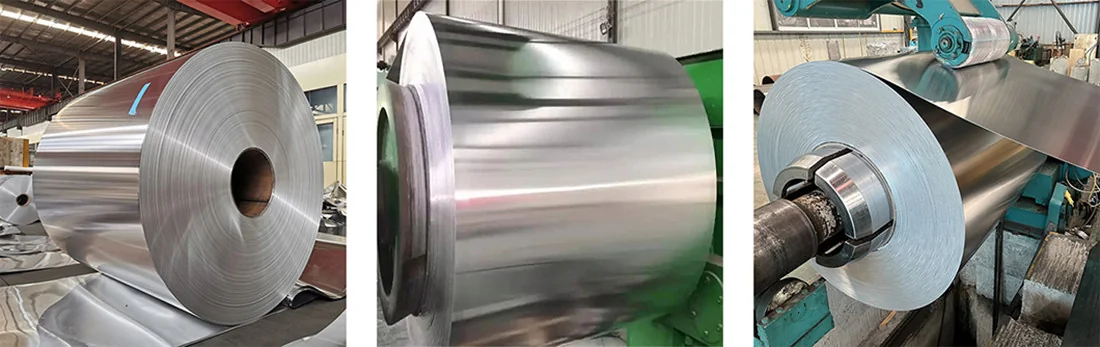
SCT supplies 3003 aluminum coil for industrial manufacturing, construction, HVAC systems, and general metal fabrication. As an aluminum-manganese alloy, 3003 offers good corrosion resistance, formability, and moderate strength, making it suitable for a wide range of cold-working applications.
Our aluminum coil product range covers multiple alloy series, with thicknesses of 0.3–14 mm, widths of 50–2,000 mm, and coil weights of 2–6 tons. Different tempers and specifications can be discussed according to your application and purchasing requirements.
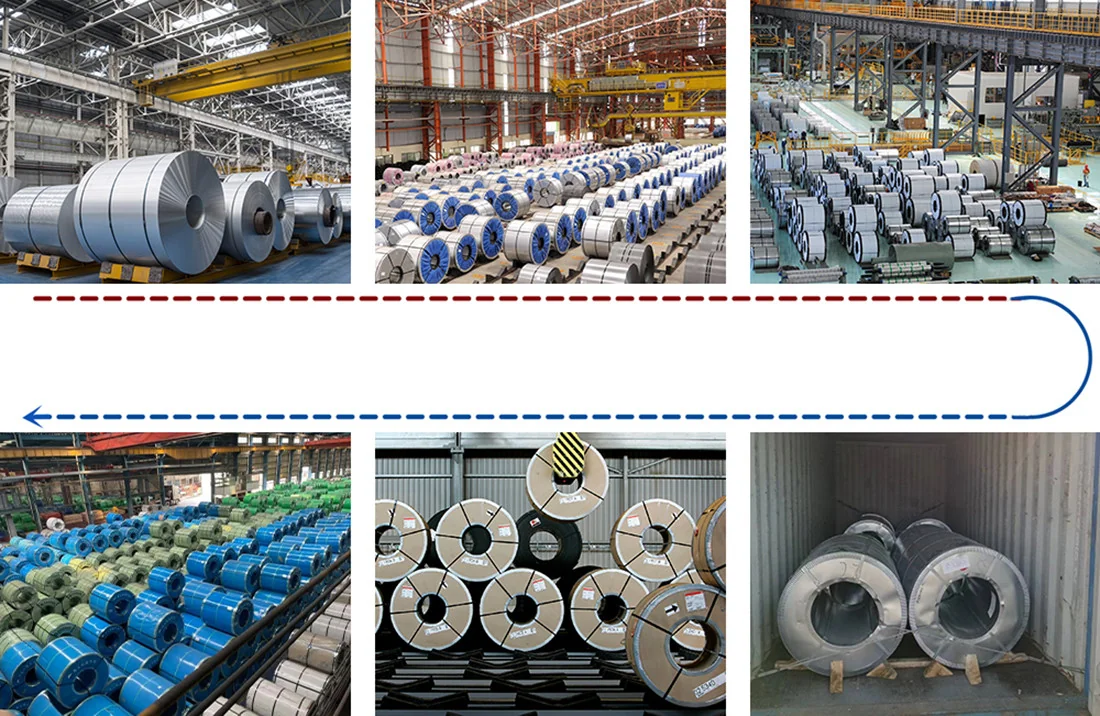
With a published aluminum coil supply capacity of 1,000 tons per month, ISO 9001 certification, and a broad range of metal material products, SCT supports overseas buyers with specification selection and bulk sourcing solutions. Contact us to discuss your 3003 aluminum coil requirements and request a quotation.
PRODUCT DETAILS
PRODUCT SHOW
PACKING AND SHIPPING
APPLICATION
What Are the Properties and Benefits of 3003 Aluminum Coil?
3003 aluminum coil is a widely used aluminum-manganese alloy known for its good corrosion resistance, formability, and moderate strength. It is a practical choice for manufacturers that need a balance of durability, workability, and material cost. Compared with many higher-strength aluminum alloys, 3003 is easier to bend, roll, and shape for general fabrication.
One of its main advantages is its ability to handle different forming processes. It can be used for products that require bending, stamping, drawing, and other cold-working operations. Its corrosion resistance also makes it suitable for many indoor and outdoor applications where normal atmospheric exposure is expected.
For buyers, choosing the right aluminum coil means more than selecting the alloy number. Temper, thickness, width, and surface condition can all affect the final processing result. SCT supplies aluminum coils across multiple alloy series, including 3003, 3004, and 3005, allowing buyers to discuss different material options according to their production requirements.
Whether you need material for general fabrication or a specific industrial application, providing your processing method and required dimensions helps SCT recommend a more suitable specification.
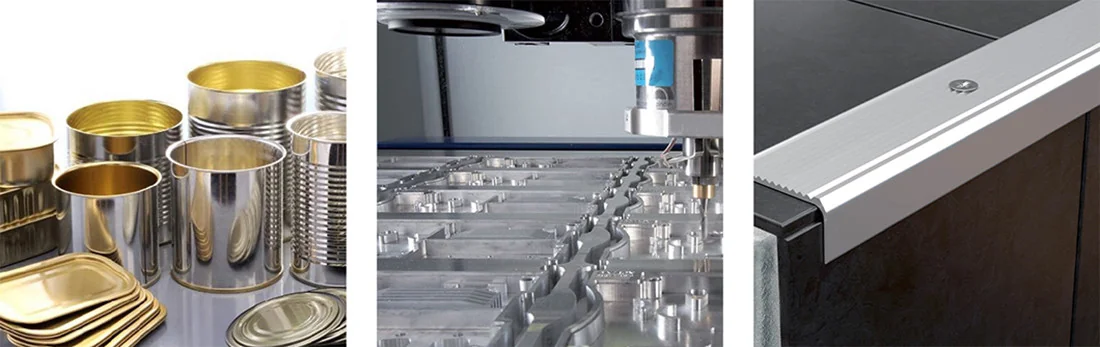
What Are the Common Applications of 3003 Aluminum Coil?
3003 aluminum coil is used in a wide range of industries because of its good formability, corrosion resistance, and general-purpose performance. It is particularly suitable for products that require consistent material properties during bending, forming, and fabrication.
Common applications include:
Application | Why Choose 3003 Aluminum Coil? |
|---|---|
HVAC Components | Suitable for forming ducts, casings, and related components |
Roofing and Building Materials | Offers good formability and atmospheric corrosion resistance |
Cooking Utensils | Can be formed into cookware and household products |
Heat Exchanger Components | Good thermal conductivity for suitable component designs |
Insulation Jacketing | Can be formed into protective outer coverings |
General Sheet Metal Fabrication | Suitable for bending, stamping, and other cold-working processes |
Different applications require different material conditions. For example, manufacturers producing formed components may prioritize ductility, while roofing and cladding processors may need a balance of formability and rigidity.
SCT offers multiple aluminum alloy grades and a range of coil specifications to support different industrial purchasing needs. By sharing your end-use application, processing method, and required dimensions, you can get a more relevant material recommendation instead of purchasing an unsuitable grade or temper.
Which Temper of 3003 Aluminum Coil Should You Choose?
The temper of 3003 aluminum coil affects its strength, hardness, and formability. Since 3003 is a non-heat-treatable aluminum alloy, its mechanical properties are mainly adjusted through cold working and annealing rather than conventional solution heat treatment.
Different tempers are designed for different processing requirements.
Temper | General Characteristics | Typical Considerations |
|---|---|---|
3003-O | Soft and highly formable | Deep drawing and complex forming |
3003-H12 | Quarter-hard condition | General fabrication and moderate forming |
3003-H14 | Half-hard condition | Roofing, panels, and general fabrication |
3003-H16 | Higher strength than H14 | Applications requiring greater rigidity |
3003-H18 | Full-hard condition | Applications where higher hardness is required |
3003-H24 | Strain-hardened and partially annealed | Formed building and industrial components |
The best temper depends on the final product rather than strength alone. A material that is too hard may increase the risk of cracking during tight bending, while a softer temper may not provide enough rigidity for certain applications.
SCT lists several aluminum coil tempers, including O, H12, H14, H16, H18, H24, and other options. Buyers should confirm the available temper, thickness, and mechanical requirements before ordering.
If you are unsure which temper to select, share your product design and processing requirements with SCT. This helps reduce material selection errors and unnecessary production adjustments.
3003 Aluminum Coil Specifications and Custom Sizes
Choosing the correct specifications is essential for controlling material costs and maintaining production efficiency. When purchasing 3003 aluminum coil, buyers should pay attention to alloy grade, temper, thickness, width, coil weight, and applicable standards.
SCT provides aluminum coil products with a published thickness range of 0.3–14 mm, widths of 50–2,000 mm, and coil weights of approximately 2–6 tons. The product range covers multiple aluminum alloy series, including 1000, 2000, 3000, 4000, 5000, and 6000 series.
Key purchasing specifications include:
Parameter | SCT Published Aluminum Coil Range |
|---|---|
Alloy | 3003 and other aluminum grades |
Thickness | 0.3–14 mm |
Width | 50–2,000 mm |
Coil Weight | 2–6 tons |
Temper | O, H12, H14, H16, H18, H24 and other listed options |
Certification | ISO 9001 company certification |
The above are published aluminum coil product ranges, not a guarantee that every 3003 grade, temper, and dimension combination is available. Confirm the exact specification before ordering.
Incorrect dimensions can lead to material waste, additional processing, and higher production costs. To help avoid these problems, buyers should provide their required thickness, width, temper, coil weight, and intended application when requesting a quotation.
With a stated aluminum coil supply capacity of 1,000 tons per month across its product range, SCT can discuss supply arrangements for different purchasing volumes. Its broad aluminum product selection also makes it easier for buyers to explore related grades through one supplier.
3003 Aluminum Coil vs. 5052 Aluminum Coil: What Is the Difference?
3003 and 5052 aluminum coils are both widely used in industrial manufacturing, but they serve different requirements. Choosing between them depends on the strength, corrosion resistance, forming process, and working environment required by the final product.
Comparison | 3003 Aluminum Coil | 5052 Aluminum Coil |
|---|---|---|
Main Alloying Element | Manganese | Magnesium |
Strength | Moderate | Generally higher |
Formability | Good to excellent, depending on temper | Good, depending on temper |
Corrosion Resistance | Good | Generally better in marine environments |
Welding Performance | Good | Good |
Common Applications | HVAC, cookware, roofing, general fabrication | Marine components, fuel tanks, enclosures, sheet metal products |
For buyers producing general formed components, roofing materials, or household products, 3003 aluminum coil is often a practical choice. When higher strength or better resistance to certain corrosive environments is required, 5052 aluminum may be more appropriate.
However, the best choice should always be based on the actual application, thickness, temper, and required mechanical properties.
SCT offers both 3003 and 5052 aluminum material options within its wider aluminum product range. This allows buyers to compare available grades and discuss suitable alternatives before placing an order.
Why Choose SCT for 3003 Aluminum Coil Supply?
Finding a suitable 3003 aluminum coil supplier involves more than comparing quotations. Buyers need to consider product availability, specification matching, quality management, and the supplier's ability to support repeat orders.
Shaanxi Shunchengtian Materials Co., Ltd. (SCT) supplies a broad range of metal materials, including aluminum material, stainless steel material, carbon steel for sale, galvanized material, copper material, and titanium products. This multi-category supply capability provides overseas buyers with more options when sourcing different metal materials for their projects.
For aluminum coil supply, SCT lists a monthly capacity of 1,000 tons, covering multiple aluminum alloy series. Its published product specifications include thicknesses of 0.3–14 mm, widths of 50–2,000 mm, and coil weights of 2–6 tons.
SCT also holds ISO 9001 certification and accepts third-party inspection according to its published purchasing information. These arrangements give buyers additional ways to review supplier qualifications and verify product requirements before shipment.
Whether you are purchasing 3003 aluminum coil for regular production or sourcing several aluminum grades for different applications, SCT can discuss the required alloy, temper, dimensions, quantity, and delivery arrangements with your team.
Contact SCT today with your required 3003 aluminum coil specifications. Share your thickness, width, temper, and order quantity to receive a quotation and discuss a suitable supply solution.
Aluminum Coil FAQs
FAQ 1. What Is 3003 Aluminum Coil Used For?
3003 aluminum coil is commonly used in HVAC components, roofing materials, gutters, cooking utensils, heat exchanger parts, insulation jacketing, and general sheet metal fabrication. Its good formability and corrosion resistance make it suitable for products that require bending, stamping, and cold forming.
FAQ 2. Is 3003 Aluminum Coil Suitable for Bending and Forming?
Yes. 3003 aluminum coil offers good formability, although its performance depends on the selected temper and thickness. The O temper is generally suitable for more complex forming, while H14 and H24 offer a balance of strength and formability. Buyers should confirm the bending radius and processing requirements before selecting a temper.
FAQ 3. What Is the Difference Between 3003-O and 3003-H14 Aluminum Coil?
3003-O is an annealed, softer condition with higher ductility, making it suitable for deep drawing and complex forming. 3003-H14 is strain-hardened to a half-hard condition, providing higher strength and hardness but lower formability. The right option depends on the final product and manufacturing process.
FAQ 4. What Thickness and Width Are Available for 3003 Aluminum Coil?
SCT publishes an aluminum coil thickness range of 0.3–14 mm and a width range of 50–2,000 mm, with coil weights of approximately 2–6 tons. Actual 3003 availability depends on the required alloy, temper, and dimensions. Contact SCT with your specifications to confirm the available options.
FAQ 5. What Is the Difference Between 3003 and 5052 Aluminum Coil?
3003 aluminum coil is an aluminum-manganese alloy known for good formability and general corrosion resistance. 5052 is an aluminum-magnesium alloy that generally offers higher strength and better corrosion resistance in marine environments. 3003 is often used for HVAC components, cookware, and roofing, while 5052 is common in marine components, fuel tanks, and industrial enclosures.
FAQ 6. What Information Should I Provide When Requesting a 3003 Aluminum Coil Quote?
To receive an accurate quotation, buyers should provide the following details:
Alloy: 3003
Temper: O, H12, H14, H16, H18, H24, etc.
Thickness and width
Coil weight or total order quantity
Surface finish requirements
Intended application
Applicable standard and inspection requirements
Destination port
SCT can use these details to check the appropriate product specifications and discuss a suitable supply solution.


