


SCT supplies 1100 aluminum coil for industrial manufacturing, cookware, heat exchanger components, reflectors, and general metal fabrication. As a commercially pure aluminum alloy with a minimum aluminum content of 99.0%, 1100 offers good corrosion resistance, excellent formability, and high thermal and electrical conductivity.
Our aluminum coil supply range covers multiple alloy series, including 1050, 1060, 1100, 3003, and 5052. General supply specifications include thicknesses of 0.3–14 mm, widths of 50–2,000 mm, and coil weights of 2–6 tons, subject to specific grade and temper availability.
With a published monthly aluminum coil supply capacity of 1,000 tons, ISO 9001 certification, and third-party inspection support, SCT helps international buyers source aluminum materials for different manufacturing requirements. Contact us with your required temper, dimensions, and order quantity to discuss a suitable 1100 aluminum coil supply solution.
PRODUCT DETAILS
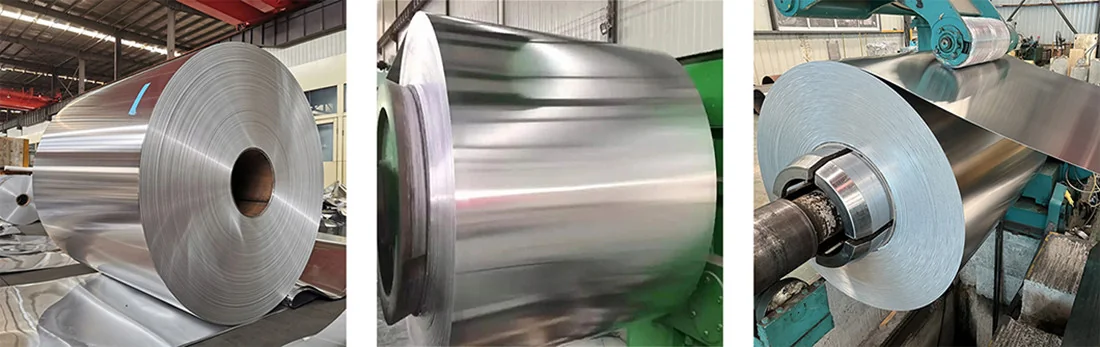
PRODUCT SHOW
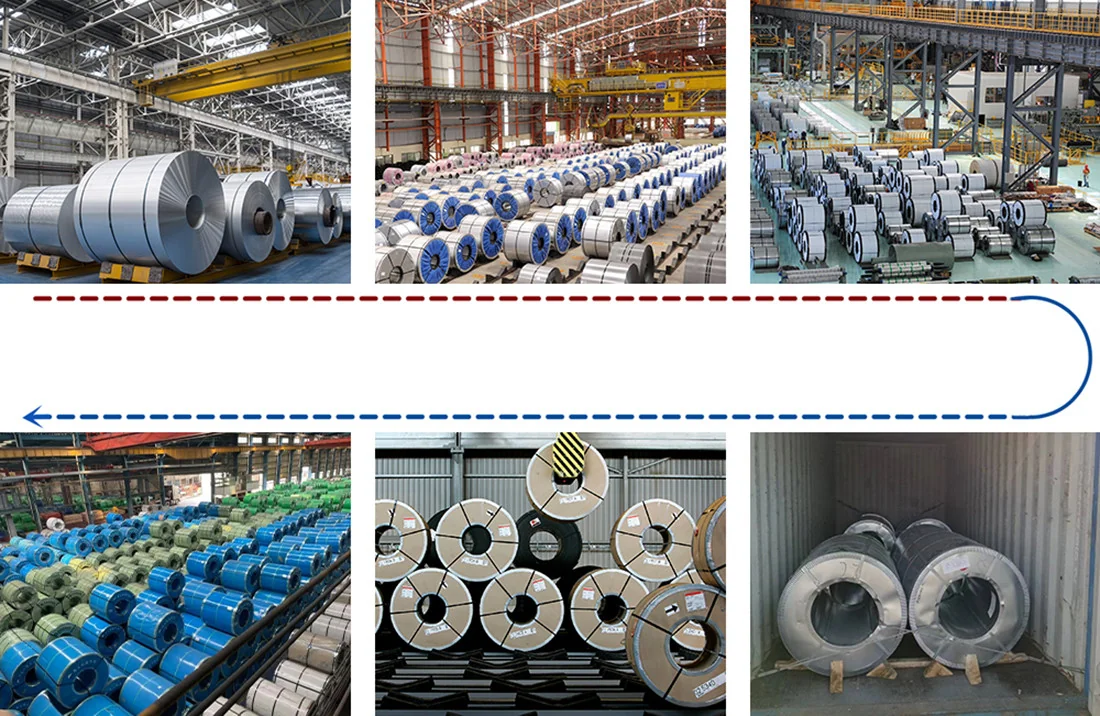
PACKING AND SHIPPING
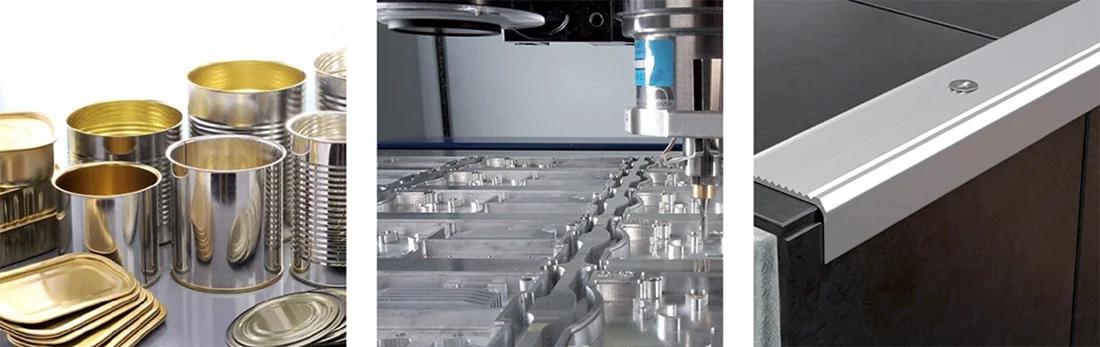
APPLICATION
What Are the Properties and Advantages of 1100 Aluminum Coil?
1100 aluminum coil is a commercially pure aluminum product with a minimum aluminum content of 99.0%. It belongs to the 1000 series and is widely selected for applications that require good corrosion resistance, high thermal conductivity, electrical conductivity, and excellent workability.
One of its main advantages is its excellent formability. 1100 aluminum coil can be processed through bending, stamping, drawing, and spinning, making it suitable for manufacturers producing components with different shapes and dimensions. Its relatively high purity also contributes to good corrosion resistance in many atmospheric environments.
Another important feature is its thermal and electrical conductivity. These properties make 1100 aluminum a practical material for heat transfer components, reflectors, electrical parts, and various industrial products. However, it has lower mechanical strength than many alloyed aluminum grades, so it should not be selected for applications that require high structural strength without further evaluation.
For buyers, selecting the correct 1100 aluminum coil requires attention to more than alloy composition. Temper, thickness, surface condition, and processing requirements all influence the finished product.
SCT supplies several aluminum alloy series, including 1050, 1060, 1100, 3003, and 5052. This allows buyers to compare different material options through one supplier and choose a grade that better matches their manufacturing requirements.
What Is 1100 Aluminum Coil Used For?
1100 aluminum coil is widely used in manufacturing applications where formability, corrosion resistance, and thermal conductivity are important. Its commercial purity and processing characteristics make it suitable for products that require bending, drawing, stamping, or surface finishing.
Common applications include:
Application | Why Choose 1100 Aluminum Coil? |
|---|---|
Cooking Utensils | Good formability for cookware and household products |
Heat Exchanger Components | High thermal conductivity supports heat transfer |
Reflectors and Lighting Parts | Suitable for products requiring reflective surfaces |
Nameplates and Signage | Easy to process into thin formed components |
Chemical Equipment | Corrosion resistance in suitable environments |
Building Decoration | Suitable for decorative panels and formed components |
HVAC Components | Good formability for selected ducts and related parts |
Electrical Components | Good electrical conductivity for suitable applications |
For manufacturers producing cookware or deep-drawn components, the soft O temper may be preferred because of its higher ductility. For nameplates, decorative panels, and other products requiring greater rigidity, harder tempers may be more suitable.
The final material choice should also consider the operating environment, forming depth, surface finish, and dimensional requirements. For example, applications involving chemical exposure or food contact may require additional verification of the material grade, coating, and applicable regulations.
SCT supplies a range of aluminum products covering multiple alloy series. Buyers can discuss their end-use application and required specifications to identify a suitable material option and avoid unnecessary changes during production.
1100 Aluminum Coil Tempers: O, H14, H18 and More
The temper of 1100 aluminum coil directly affects its hardness, strength, and forming performance. Since 1100 is a non-heat-treatable aluminum alloy, its mechanical properties are mainly adjusted through cold working and annealing.
Different tempers are suitable for different manufacturing processes.
Temper | General Characteristics | Typical Applications |
|---|---|---|
1100-O | Fully annealed, soft, and highly ductile | Deep drawing, spinning, cookware |
1100-H12 | Strain-hardened to a relatively soft condition | Light forming and general fabrication |
1100-H14 | Half-hard condition with a balance of strength and formability | Nameplates, panels, general sheet metal work |
1100-H16 | Higher strength than H14 | Components requiring greater rigidity |
1100-H18 | Full-hard condition with higher hardness and lower ductility | Flat panels, decorative parts, signage |
1100-H24 | Strain-hardened and partially annealed | Selected formed components and industrial products |
Choosing the wrong temper can create problems during manufacturing. A harder material may crack during deep drawing or tight bending, while a softer material may not provide sufficient stiffness for the finished component.
For this reason, buyers should confirm the forming method, required mechanical properties, and final product dimensions before ordering.
SCT offers aluminum coil products in multiple tempers, with the available options depending on the alloy, thickness, and supply requirements. If you are unsure whether 1100-O or 1100-H14 is more suitable, provide your processing details so the material requirements can be evaluated before quotation and production.
1100 Aluminum Coil Specifications and Custom Supply Options
Choosing the right specifications is essential for controlling material waste, improving processing efficiency, and ensuring compatibility with existing production equipment.
When purchasing 1100 aluminum coil, buyers should confirm the alloy grade, temper, thickness, width, coil weight, inner diameter, and applicable standards. These details affect material handling, slitting, forming, and final product dimensions.
SCT publishes the following general aluminum coil supply specifications:
Specification | Published Supply Range |
|---|---|
Aluminum Alloy | 1000, 2000, 3000, 4000, 5000 and 6000 series |
Available Grades | 1050, 1060, 1100, 3003, 5052 and more |
Thickness | 0.3–14 mm |
Width | 50–2,000 mm |
Coil Weight | 2–6 tons |
Monthly Supply Capacity | 1,000 tons |
These figures represent the company's published general aluminum coil supply range. Actual 1100 aluminum coil specifications and availability must be confirmed according to the required temper, dimensions, and order quantity.
Before placing an order, buyers should prepare a clear specification list. Important details include:
Required alloy and temper
Thickness and width
Coil inner diameter and preferred coil weight
Surface finish and appearance requirements
Applicable material standards
Total order quantity and destination port
Providing accurate specifications helps reduce quotation delays and prevents misunderstandings between the buyer and supplier.
SCT's broad aluminum material portfolio also allows buyers to discuss 1100 aluminum coil alongside other grades such as 1050, 1060, and 3003. For businesses sourcing several aluminum materials, this can simplify supplier communication and purchasing coordination.
1100 vs. 1050 vs. 3003 Aluminum Coil: Which Should You Choose?
1100, 1050, and 3003 aluminum coils are commonly used in industrial manufacturing, but their compositions and performance characteristics are different. Understanding these differences can help buyers avoid selecting a material that does not meet their production requirements.
Comparison | 1100 Aluminum Coil | ||
|---|---|---|---|
Alloy Series | 1000 Series | 1000 Series | 3000 Series |
Main Composition | Commercially pure aluminum, Al ≥99.0% | Commercially pure aluminum, Al ≥99.5% | Aluminum-manganese alloy |
Strength | Relatively low | Relatively low | Generally higher than 1100 and 1050 |
Formability | Excellent | Excellent | Good |
Corrosion Resistance | Good | Good | Good |
Thermal Conductivity | High | High | Generally lower than pure aluminum grades |
Typical Applications | Cookware, reflectors, heat exchangers, nameplates | General fabrication, reflectors, chemical equipment | HVAC, cookware, roofing, industrial fabrication |
When should you choose 1100 aluminum coil?
Choose 1100 when your application requires a combination of good formability, corrosion resistance, and thermal or electrical conductivity. It is suitable for products such as cookware, reflectors, heat exchanger components, and general formed parts.
When should you choose 1050 aluminum coil?
1050 is worth considering when higher aluminum purity and good conductivity are important. It is commonly used in applications requiring high purity, workability, and corrosion resistance.
When should you choose 3003 aluminum coil?
3003 may be more suitable when you need greater strength than commercially pure aluminum while maintaining good formability and corrosion resistance.
The best choice depends on your product design, forming process, required strength, and operating environment rather than alloy composition alone.
SCT supplies all three grades as part of its broader aluminum material range. Buyers can compare available specifications and discuss alternative materials before confirming an order, helping reduce the risk of unnecessary material costs or processing problems.
Aluminum Coil FAQs
FAQ 1. What Is 1100 Aluminum Coil Made Of?
1100 aluminum coil is a commercially pure aluminum alloy containing at least 99.0% aluminum. It belongs to the 1000 series and contains small amounts of other elements, including copper, iron, and silicon. Its high aluminum content contributes to good corrosion resistance, formability, thermal conductivity, and electrical conductivity.
FAQ 2. Is 1100 Aluminum Coil Suitable for Deep Drawing?
Yes. 1100 aluminum coil is suitable for deep drawing because of its excellent ductility and formability, particularly in the O temper. It is commonly used for cookware, hollow products, reflectors, and other formed components. The required thickness, temper, and forming depth should be confirmed before production to reduce the risk of cracking.
FAQ 3. What Is the Difference Between 1100-O and 1100-H14 Aluminum Coil?
1100-O is fully annealed and offers high ductility, making it suitable for deep drawing and complex forming. 1100-H14 is a half-hard temper with higher strength and hardness while maintaining useful formability. O is generally preferred for extensive forming, while H14 is suitable for applications requiring a balance of rigidity and workability.
FAQ 4. Is 1100 Aluminum Coil Heat Treatable?
No. 1100 aluminum is a non-heat-treatable alloy. Its strength is mainly increased through cold working, which produces different tempers such as H12, H14, H16, and H18. Annealing can soften the material and restore ductility for further forming.
FAQ 5. What Is the Difference Between 1100 and 1050 Aluminum Coil?
Both 1100 and 1050 belong to the commercially pure aluminum series. The main difference is their minimum aluminum content: 1100 contains at least 99.0% aluminum, while 1050 contains at least 99.5%. Both offer good corrosion resistance and formability. 1050 may be preferred when higher purity is required, while 1100 offers a practical balance of purity, workability, and general industrial performance.
FAQ 6. How Do I Choose the Right 1100 Aluminum Coil Supplier?
When choosing a supplier, consider the available alloy grades, temper options, dimensional specifications, supply capacity, quality certification, and inspection arrangements. You should also confirm the availability of material documentation and third-party inspection if required. Providing detailed purchasing specifications helps the supplier recommend a suitable product and prepare an accurate quotation.


