

When stainless steel piping is exposed to high temperatures, ordinary grades may not provide enough strength, oxidation resistance, or long-term stability. This is where 310S stainless steel pipe becomes an important material choice. Designed for demanding thermal environments, 310S stainless steel combines high-temperature performance with the corrosion resistance expected from austenitic stainless steel.
Also known as UNS S31008 and commonly associated with ASTM 310S stainless steel, this grade is widely used in furnaces, heat treatment equipment, boilers, petrochemical facilities, and other industrial systems where piping must withstand elevated temperatures.
But what makes 310S stainless steel pipe different from more common grades such as 304 or 316? And when should manufacturers and engineers choose 310S instead of another stainless steel grade?
This guide explains the composition, properties, advantages, applications, specifications, and selection considerations of 310S stainless steel pipe.
What Is 310S Stainless Steel Pipe?
310S stainless steel pipe is a low-carbon version of 310 stainless steel developed for high-temperature applications. It belongs to the austenitic stainless steel family and contains relatively high levels of chromium and nickel.
The high chromium content provides strong resistance to oxidation, while nickel helps maintain structural stability and corrosion resistance in demanding environments. The lower carbon content of 310S also improves weldability and reduces the risk of certain forms of corrosion associated with welding.
Typical 310S stainless steel contains approximately 24–26% chromium and 19–22% nickel, although the exact composition depends on the applicable material standard.
Because of this alloy composition, 310S stainless steel pipe offers a useful combination of:
High-temperature oxidation resistance
Good corrosion resistance
High-temperature strength
Good weldability
Good resistance to thermal cycling
Long service life in demanding industrial environments
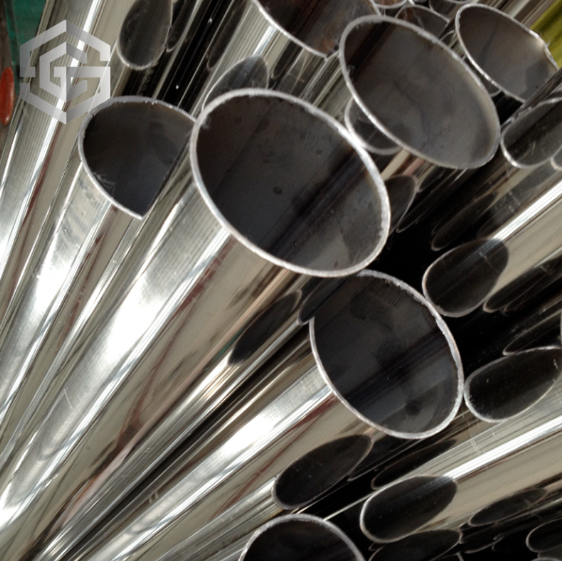
310S pipe can be manufactured in seamless or welded forms and is available in different outside diameters, wall thicknesses, lengths, and surface finishes.
Key Properties of 310S Stainless Steel Pipe
The biggest reason industries select 310S is its ability to maintain useful performance at elevated temperatures.
High-Temperature Resistance
310S stainless steel is designed for environments where temperatures can exceed the practical operating range of standard stainless steel grades.
Its high chromium and nickel content helps the material resist oxidation and maintain its structure when exposed to prolonged heat. This makes it suitable for furnace components, combustion equipment, heat treatment systems, and high-temperature piping.
However, the actual maximum operating temperature depends on factors such as atmosphere, mechanical loading, pressure, thermal cycling, and service conditions. Engineers should therefore select the material according to the complete operating environment rather than relying on temperature alone.
Oxidation Resistance
At high temperatures, oxidation can cause conventional metals to deteriorate rapidly. The chromium in 310S stainless steel helps form a protective oxide layer on the material surface.
This characteristic makes 310S particularly useful in applications where pipes are repeatedly exposed to hot air, combustion gases, or other oxidizing environments.
Corrosion Resistance
Although 310S is primarily selected for high-temperature performance, it also provides good corrosion resistance in many industrial environments.
It performs well in a variety of oxidizing atmospheres and can be considered when both heat and corrosion resistance are required. Nevertheless, it is not universally superior to every stainless steel grade in wet or chloride-rich environments.
For applications where chloride corrosion is the primary concern, grades such as 316 or 316L may be more appropriate depending on the conditions.
Weldability
The lower carbon content of 310S compared with standard 310 contributes to better welding characteristics.
This is especially useful when manufacturing fabricated piping systems, process equipment, furnace components, and other assemblies that require welding.
Proper welding procedures and post-weld considerations are still important because service conditions and fabrication methods can affect the final performance of the pipe.
What Is 310S Stainless Steel Pipe Used For?
The main applications of 310S stainless steel pipe are concentrated in industries where high temperature is a major operating factor.
Furnace and Heat Treatment Equipment
One of the most common applications is furnace and heat treatment equipment.
310S stainless steel pipe can be used in components exposed to high temperatures, including:
Furnace piping
Heating equipment
Heat treatment systems
Furnace supports
Radiant tubes
Combustion-related components
Its oxidation resistance helps extend service life under continuous or repeated heating conditions.
Petrochemical and Chemical Processing
Petrochemical plants and chemical processing facilities often operate equipment at elevated temperatures.
310S stainless steel pipe can be used in selected high-temperature process lines and equipment where resistance to heat, oxidation, and certain corrosive environments is required.
Material selection should always consider the specific chemical medium, concentration, pressure, and temperature because 310S is not designed for every chemical service.
Heat Exchangers and Thermal Equipment
Heat exchangers transfer thermal energy between different fluids and can operate under demanding temperature conditions.
Depending on the design and process medium, 310S stainless steel may be used in thermal equipment where elevated-temperature resistance is more important than the specialized corrosion resistance offered by other grades.
Boiler and Power Generation Equipment
High-temperature piping is an important part of power generation and thermal processing systems.
310S stainless steel pipe can be considered for selected components exposed to elevated temperatures, particularly where oxidation resistance and thermal stability are required.
The exact grade should be determined based on operating pressure, temperature, steam conditions, and applicable engineering standards.
Industrial Kilns and Drying Equipment
Kilns, industrial ovens, and drying systems can subject metal components to continuous heat.
310S stainless steel pipe is suitable for applications where conventional stainless steel may experience excessive oxidation or loss of performance.
Its combination of high-temperature resistance and corrosion resistance makes it useful for industrial thermal equipment.
310S vs 304 Stainless Steel Pipe
A common question is whether 310S stainless steel pipe is better than 304 stainless steel pipe.
The answer depends on the application.
304 stainless steel pipe is one of the most widely used stainless steel grades because it offers good corrosion resistance, formability, weldability, and cost-effectiveness. It is commonly used in food processing, construction, general industrial equipment, water systems, and many other applications.
310S stainless steel pipe, by comparison, is more specialized for elevated-temperature service.
The key difference is the alloy composition. 310S contains significantly higher chromium and nickel levels than 304, which contributes to its superior performance in high-temperature and oxidation-prone environments.
Therefore:
Choose 304 stainless steel pipe for general-purpose corrosion-resistant applications.
Consider 310S stainless steel pipe when high-temperature oxidation resistance is a major requirement.
Evaluate 316/316L when chloride resistance or specific chemical corrosion resistance is more important.
The most expensive grade is not automatically the best choice. Selecting the correct material according to operating conditions can reduce both initial material costs and long-term maintenance expenses.
What Sizes and Types of 310S Stainless Steel Pipe Are Available?
310S stainless steel pipe is available in a wide range of configurations to meet different industrial requirements.
Common options include:
Seamless 310S Stainless Steel Pipe
Seamless pipe is manufactured without a welded seam and is often selected for applications involving high pressure, elevated temperatures, or demanding mechanical conditions.
Welded 310S Stainless Steel Pipe
Welded pipe is produced by forming stainless steel plate or strip and welding the longitudinal seam. It can provide an economical solution for many larger-diameter piping applications.
Other purchasing specifications may include:
Outside diameter
Wall thickness
Pipe length
Surface finish
Manufacturing standard
Heat treatment condition
Chemical composition
Mechanical properties
Depending on the project, buyers may need products manufactured according to standards such as ASTM, ASME, EN, or other applicable specifications.
How to Choose the Right 310S Stainless Steel Pipe
Before purchasing 310S stainless steel pipe, buyers should evaluate more than the material grade.
Consider Operating Temperature
Determine the normal and peak operating temperatures. Continuous exposure to extreme temperatures can have a different effect from short-term exposure.
Check Pressure Requirements
For pressurized piping, the outside diameter, wall thickness, temperature, and material properties must be considered together.
Evaluate the Service Environment
Identify whether the pipe will be exposed to:
Oxidizing gases
Combustion gases
Chemicals
Steam
Moisture
Chlorides
Repeated thermal cycling
This helps determine whether 310S is the appropriate grade or whether another alloy would provide better performance.
Select the Appropriate Manufacturing Type
Seamless and welded pipes have different manufacturing characteristics and are suitable for different applications. The choice should be based on pressure, diameter, fabrication requirements, applicable standards, and project specifications.
Confirm Quality and Certification
For industrial procurement, buyers should verify material certificates, chemical composition, mechanical properties, dimensional tolerances, testing requirements, and compliance with the requested standard.
Working with an experienced stainless steel pipe manufacturer can also help ensure that the selected product matches the actual service conditions.
Why Choose 310S Stainless Steel Pipe?
310S stainless steel pipe is not simply a more corrosion-resistant version of standard stainless steel pipe. Its main advantage is its ability to perform reliably in high-temperature and oxidation-prone environments.
Its high chromium and nickel content provides a combination of heat resistance, oxidation resistance, corrosion resistance, and mechanical stability that makes it valuable for demanding industrial applications.
For furnace equipment, heat treatment systems, petrochemical facilities, thermal processing equipment, and other high-temperature applications, 310S can provide a practical alternative to conventional stainless steel grades.
At the same time, material selection should always be based on actual temperature, pressure, chemical exposure, fabrication method, and applicable standards. A higher-grade alloy is only beneficial when its properties match the application's requirements.
310S Stainless Steel Pipe FAQs
Is 310S stainless steel pipe suitable for high-temperature applications?
Yes. 310S is specifically valued for its resistance to oxidation and ability to maintain useful performance at elevated temperatures, making it suitable for many furnace, heat treatment, and thermal processing applications.
What is the difference between 310 and 310S stainless steel pipe?
310S has a lower carbon content than 310 stainless steel. The lower carbon level can provide improved welding characteristics and is useful for certain fabricated components and high-temperature applications.
Is 310S better than 304 stainless steel pipe?
Neither grade is universally better. 304 is generally more suitable for general-purpose applications, while 310S is typically considered when high-temperature and oxidation resistance are key requirements.
Is 310S stainless steel pipe corrosion resistant?
Yes. 310S provides good corrosion resistance in many environments, particularly oxidizing environments. However, the appropriate grade depends on the specific chemical and service conditions.
Can 310S stainless steel pipe be welded?
Yes. 310S can be welded using appropriate welding procedures and compatible filler materials. Welding practices should be selected according to the applicable engineering requirements.
Final Thoughts
310S stainless steel pipe is a specialized stainless steel piping material designed to address one of the biggest challenges in industrial equipment: maintaining performance under high temperatures.
Its high chromium and nickel content gives it strong oxidation resistance, thermal stability, and useful corrosion resistance, making it suitable for furnaces, heat treatment equipment, petrochemical processing, thermal systems, and other demanding applications.
If your project requires stainless steel piping for elevated-temperature service, 310S is worth considering alongside grades such as 304, 316, 309S, and other heat-resistant alloys. The best choice ultimately depends on the operating temperature, pressure, environment, manufacturing requirements, and applicable standards.


